
A Pomona home inspection guide begins with the conditions that most often affect a buyer’s budget and leverage: roof wear, cooling performance, drainage, electrical safety, plumbing, and visible structural concerns. Inspection findings in Pomona reflect warm weather, seasonal rain, established housing, and renovations completed across different eras. The report helps first-time buyers separate routine maintenance from conditions that may affect safety, financing, insurance, or the terms they request before removing their investigation contingency.
Quick Facts: Home Inspections in Pomona
- Contract timeline: The standard California residential purchase agreement provides 17 days after acceptance for buyer investigations unless the parties agree otherwise (California Association of REALTORS®, 2026).
- State framework: California defines a home inspection as a noninvasive examination of accessible residential systems and components intended to identify material defects (California Business and Professions Code Section 7195).
- Inspector licensing: California does not issue a standalone state home-inspector license, so qualifications, insurance, experience, and report quality merit close review.
- Local market context: Pomona’s postal-city area recorded 991 reported home sales in the aggregate tracked by Attom Data (Attom Data, as of 2026-07).
- Inspection scope: A standard inspection reviews accessible conditions, not concealed defects, future performance, or every possible specialty issue.
Pomona Inspection Market Overview
Pomona buyers should treat a general inspection as the first screen for material visible conditions, then use qualified specialists when the report identifies a concern. The most meaningful findings usually involve water entry, roof drainage, cooling equipment, electrical safety, plumbing function, and visible signs of movement.
The local housing market also includes homes with original systems alongside partial upgrades. That mix makes documentation important. Buyers benefit from comparing the report with seller disclosures, repair invoices, permits, warranties, and maintenance records before deciding which items warrant further evaluation or a negotiation request.
What Pomona Inspectors Find Most Often
Pomona inspectors most often flag conditions involving roofs, cooling systems, electrical components, plumbing, drainage, moisture, and visible structural concerns. These findings are not automatic reasons to walk away, but they can materially change a buyer’s first-year repair plan and negotiating position.
Roof wear and drainage issues are frequent maintenance concerns because prolonged sun exposure can affect roofing materials, sealants, flashing, and penetrations. Active leakage is more serious because water can reach insulation, framing, ceilings, or electrical components.
Cooling-system performance deserves careful attention in Pomona’s warm climate. An aging or poorly maintained air-conditioning system can be a substantial near-term expense, while unsafe electrical connections at the equipment call for prompt correction.
Electrical panel and wiring conditions may include improper connections, missing safety protections, or visible alterations associated with past renovation work. These are safety issues when the condition creates shock, fire, or equipment risks.
Plumbing leaks and drainage performance are also common inspection priorities. A dripping fixture may be routine maintenance, but recurring leakage, slow drains, or water-heater installation concerns can justify a specialist assessment.
Water intrusion and grading problems can become significant after seasonal rain. Inspectors may note staining, deteriorated caulking, roof runoff, poor drainage paths, or grading that directs water toward the structure.
Visible cracking, uneven floors, and apparent movement need proportionate follow-up. Southern California’s seismic setting means buyers should distinguish cosmetic aging from conditions that could require a structural professional’s review.
For buyers comparing property condition with available inventory, the site’s MLS listing search can help place inspection findings in the context of other homes currently offered nearby.
Inspection findings can also have different financial implications depending on the type of property you're purchasing. For example, a condo association may manage certain exterior repairs, while townhome and patio home owners may have different maintenance responsibilities. Before making an offer, explore how Pomona housing options compare in ownership and upkeep to better understand which repairs, HOA fees, and future maintenance costs could become your responsibility.
Common Inspection Findings: Severity and Typical Repair Cost
The cost effect of an inspection item depends on the scope, accessibility, permit needs, materials, and whether damage extends behind finished surfaces. A report should guide which conditions need contractor estimates before a buyer chooses a repair request, credit, or price adjustment.
| Defect Type | How Common in Pomona | Typical Repair Cost Range | Severity |
|---|---|---|---|
| Roof issues | Frequent | Scope-dependent | Moderate to Major |
| HVAC | Frequent | Scope-dependent | Moderate to Major |
| Electrical panel or wiring | Occasional | Scope-dependent | Safety |
| Plumbing | Frequent | Scope-dependent | Moderate |
| Foundation or crawl space | Occasional | Scope-dependent | Major |
| Water intrusion or moisture | Frequent | Scope-dependent | Moderate to Major |
| Insulation and ventilation | Occasional | Scope-dependent | Minor to Moderate |
| Grading and roof drainage | Frequent | Scope-dependent | Moderate |
California’s home-inspection law covers accessible systems and material defects, while trade specialists determine repair scope for particular roofing, electrical, plumbing, or structural conditions.
How Pomona's Climate and Housing Stock Drive These Findings
Pomona’s climate and established housing stock place exterior durability, cooling reliability, and water management at the center of a home inspection. Long warm periods can accelerate wear on roof surfaces, exposed sealants, exterior caulking, and air-conditioning equipment. When seasonal rain arrives, weak flashing, clogged drainage paths, worn roof penetrations, and poor grading can become more visible.
Older homes may also have a mix of original components and improvements completed in different decades. A newer kitchen or fresh paint does not confirm that electrical, plumbing, insulation, ventilation, or roof systems were updated at the same time. Buyers should ask for invoices, permits where applicable, warranties, and service histories for major work.
Pomona is also within Southern California’s seismic region. Visible cracks, unsecured water heaters, irregular floor levels, and apparent bracing issues deserve careful review. A general inspection can identify observable conditions, but a specialist should define the extent of substantial movement or cracking before a buyer treats it as ordinary upkeep.
Pomona Inspection Red Flags That Can Change the Deal
- Active roof leakage: Water entering through the roof can affect ceilings, insulation, framing, and electrical components, increasing both repair scope and uncertainty.
- Unsafe electrical conditions: Exposed conductors, improper connections, and panel concerns can present immediate safety risks and may require licensed electrical work.
- Material structural movement: Significant cracking, uneven floors, or settlement indicators can require specialist review before the repair scope is understood.
- Chronic drainage or moisture intrusion: Repeated water entry can extend behind finishes and may involve roofing, grading, plumbing, or drainage corrections.
- Nonfunctioning cooling equipment: A major cooling repair can affect move-in planning and a buyer’s first-year ownership budget in Pomona.
Choosing a Home Inspector in Pomona
A Pomona buyer should choose an inspector who provides a written agreement, photographs, a clear scope of work, and a report that distinguishes safety concerns from ordinary maintenance. California Business and Professions Code Section 7195 defines a home inspection as a noninvasive examination of accessible residential systems and components for material defects.
California does not require a standalone home-inspector license. Buyers should therefore review the inspector’s education, experience, insurance coverage, sample reports, and familiarity with the home’s age, additions, and visible conditions. Professional certifications can be helpful, but they do not replace careful review of the inspector’s actual process and report quality.
Specialty services should follow the property’s visible conditions and disclosures. A sewer scope can be useful where an older private lateral is a concern. Pool and spa evaluations matter when those features are included. Roof assessment may clarify active leakage or material wear, while moisture evaluation can help when staining, odors, or prior water entry are visible.
Specialty Inspections Worth Considering in Pomona
| Inspection Type | Recommended in Pomona? | Typical Add-On Cost | Why It Matters Here |
|---|---|---|---|
| Sewer scope | Sometimes | Scope-dependent | Can clarify visible drainage concerns or an older private lateral |
| Radon test | Rarely | Scope-dependent | Consider when a property-specific concern supports further review |
| Mold and air quality | Sometimes | Scope-dependent | Useful after visible staining, persistent odors, or water history |
| Pool and spa | Sometimes | Scope-dependent | Helps assess visible equipment and safety features |
| Roof certification | Sometimes | Scope-dependent | Can clarify leakage, wear, and serviceability |
| Four-point inspection | Rarely | Scope-dependent | May be requested for a particular insurance situation |
| Wind mitigation report | Rarely | Scope-dependent | Not a routine Pomona purchase item |
| Chimney | Sometimes | Scope-dependent | Appropriate when a fireplace or chimney shows visible defects |
| Structural evaluation | Sometimes | Scope-dependent | Important when cracking or apparent movement is reported |
Using the Inspection Report to Negotiate
An inspection report supports negotiation when it documents a material condition that changes the home’s expected cost, safety, or usability. Active leaks, unsafe electrical conditions, significant drainage failures, substantial plumbing defects, and visible movement generally provide stronger support for a buyer response than cosmetic wear or ordinary maintenance.
A repair request can fit a defined safety correction. A closing credit may work better when the buyer wants control over contractor selection and scheduling after closing. A price adjustment can be appropriate when both parties agree that the buyer will assume a broader project. The best approach depends on the report, specialist findings, repair estimates, and the property’s overall appeal.
Pomona’s postal-city area had a reported aggregate median sale price of $674,500 as of July 2026 (Attom Data, as of 2026-07). Still, seller flexibility depends on the home’s condition, competing interest, and contract terms. If a seller declines a request, the buyer should review the investigation deadline and contractual options before removing the contingency.
Pro-Tip: Request cooling-system service records, installation details, and permit documentation before treating an older unit as a routine line item. In Pomona, cooling reliability can have an outsized effect on comfort, move-in timing, and early ownership costs.
Protect Your Purchase in Pomona
A Pomona home inspection guide is most useful when buyers turn the report into a prioritized plan for specialist follow-up, repair estimates, and negotiation choices. Margarita Manzano Valencia helps buyers evaluate inspection findings and prepare practical requests before the investigation deadline. Call or text 9512060944 to discuss your next move.
Frequently Asked Questions
How much does a home inspection cost in Pomona?
Inspection pricing varies with the home’s size, age, accessible areas, and the specialty services added to the appointment. Ask for a written agreement that identifies the systems covered, report deliverables, and any separate charges before scheduling.
What do home inspectors in Pomona find most often?
The most important Pomona findings commonly involve roof wear, cooling performance, electrical safety, plumbing, drainage, moisture evidence, and visible structural indicators. California law defines the inspection as a noninvasive review of accessible residential systems and components for material defects.
Can a seller refuse to fix anything after an inspection in Pomona?
Yes, a seller may decline a repair request unless the purchase agreement creates a separate obligation. Under the standard California contract, buyers generally have 17 days after acceptance for investigations unless the parties agree to a different period, so decisions should be made before that deadline.
Do I need a home inspection if I'm buying a new construction home in Pomona?
Yes, an independent inspection can still add value before closing on a new home. Installation issues, incomplete work, drainage concerns, and functional problems may be visible even when the property has not previously been occupied.
How long does a home inspection take in Pomona, and when do I get the report?
Timing depends on square footage, age, accessibility, condition, and any specialty services selected. Confirm the on-site schedule and report-delivery timing in the inspector’s written agreement so they fit within the 17-day investigation period when that standard timeline applies.
FROM OUR BLOG

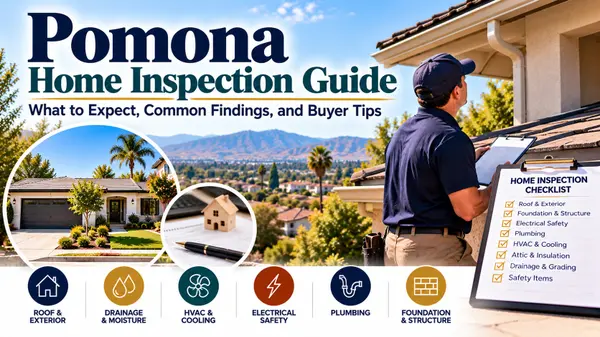
Low Appraisal in Pomona: Your Options
A low appraisal in Pomona does not automatically end your purchase. You may be able to negotiate the price, bring additional cash, split the difference, request a reconsideration of value, or exit under an active contingency. The best choice depends on the size of the gap, your financing, the contra
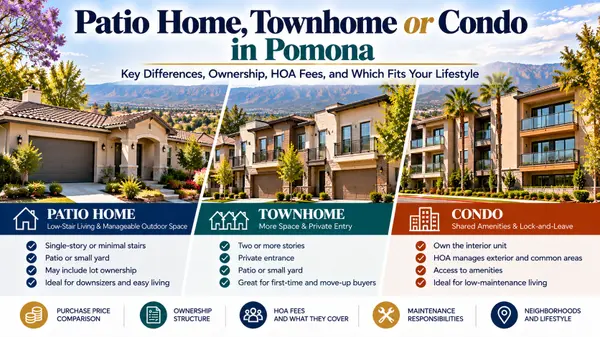
Patio Home vs Townhome vs Condo in Pomona: Which Is Right?
For many Pomona buyers, a condo offers the lightest exterior workload, a townhome provides more separated living space, and a patio home can deliver a lower-stair, house-like feel. The right patio home vs townhome vs condo in Pomona choice depends less on the listing label and more on the recorded o
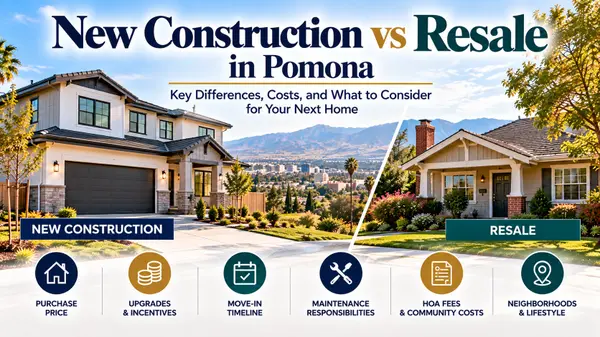
New Construction vs Resale in Pomona: Full Cost Comparison
New construction vs resale in Pomona comes down to whether you value a newer layout and predictable finishes more than an established location and greater negotiating flexibility. The right choice is rarely the one with the lower advertised price. It is the home whose total monthly cost, move-in nee