
A low appraisal in Pomona does not automatically end your purchase. You may be able to negotiate the price, bring additional cash, split the difference, request a reconsideration of value, or exit under an active contingency. The best choice depends on the size of the gap, your financing, the contract deadlines, and whether the seller has a reason to keep the deal together.
What a Low Appraisal Actually Means
-
An appraisal gap is the difference between the contract price and the value assigned to the home, and it creates a financing shortfall when the agreed price is higher than the supported value, because the lender generally calculates its loan amount from the lower appraised figure rather than the higher contract figure.
-
Lenders care about a low appraisal because the home secures the loan, so a lower valuation can reduce the amount available to borrow and require the buyer to increase cash funds, adjust the down payment, renegotiate the price, or reconsider whether the purchase still fits the budget.
-
A low value can happen when a buyer and seller agree on a price that recent nearby closed sales do not yet support, particularly when demand, upgrades, location advantages, or a limited supply of closely matched sales make the home difficult to compare with properties that have already closed.
-
Property condition can also affect the result because an appraiser must distinguish between homes with original finishes, renovated interiors, accessory units, different lot utility, varied maintenance, and changing neighborhood influences, even when properties are located only a few blocks apart.
Appraisals in Pomona: By the Numbers
Pomona sale data shows why the timing and details of a transaction can matter when value is being measured (Attom Data, as of 2026-07):
| Metric | Current reading |
|---|---|
| Median reported sale price | $674,500 |
| Average reported sale price | $779,522.70 |
| Aggregate homes sold | 991 |
| June 2026 sales | 76 homes sold, with a $689,000 median |
Why Low Appraisals Happen in Pomona
Low appraisals in Pomona are more likely when a home’s agreed price reflects features or timing that recent closed sales do not fully capture. Pomona’s reported monthly median moved from $620,000 in November 2025 to $703,500 in April 2026 before reaching $689,000 in June 2026. That movement can make the selection date, condition, and quality of comparable sales especially important when a contract is under review.
Pomona also has housing stock with meaningful variation from one property to the next. Older homes with substantial renovations may not align neatly with nearby sales that have original interiors or different maintenance histories. A property with an accessory unit, a larger usable lot, or convenient access to major commute corridors may attract stronger buyer interest than the closest comparable homes.
Seasonality can add another layer. A spring contract may be evaluated using sales that went pending earlier, before buyer competition affected pricing. Review the appraisal’s comparable-sale dates, condition adjustments, distances, and property descriptions before deciding whether the value is well supported.
Option 1: Negotiate a Lower Purchase Price
Negotiating the contract price down to the appraised value is often the simplest solution because it restores the financing calculation without requiring extra buyer cash. Present the appraisal promptly, identify the difference clearly, and make a focused request that explains why preserving the existing transaction benefits both sides.
A seller may be more willing to adjust when the home has spent longer on the market, the seller has a relocation deadline, or there is limited backup interest. In Pomona, leverage can vary by price point, condition, and the home’s appeal to competing buyers, so the request should rely on the appraisal and the deal’s facts rather than broad market claims.
Your signed contingency language determines what happens if negotiations fail. Confirm the applicable deadlines, notice requirements, and deposit terms before cancelling or changing the agreement. Seller motivation, contract timing, and the strength of the appraisal all affect whether a price adjustment is realistic.
Option 2: Cover the Gap Out of Pocket
Covering the gap means bringing cash beyond your planned down payment and closing costs because the lender generally bases financing on the lower appraised value. It can keep the purchase moving, but it requires an honest review of reserves, monthly affordability, and long-term plans.
For example, if you agree to buy at Pomona’s reported median sale price of $674,500 and the appraisal comes in at $650,000, the $24,500 difference must be handled through a price reduction, revised financing, or added buyer funds. Paying above the appraised value creates an immediate gap between the purchase price and the appraised value, although whether you have negative equity depends on your loan balance relative to the home’s value.
This route can make sense for a home you expect to own for many years, provided the additional cash does not leave you without an adequate financial cushion. Consider the likely ownership timeline, emergency reserves, and whether the home’s features justify paying more than the appraised value.
Option 3: Split the Difference
Splitting the difference lets the buyer and seller share the appraisal gap instead of requiring one side to absorb it all. The seller reduces the price partway, and the buyer contributes the remaining amount through additional cash or an adjusted financing plan.
The written addendum should state the revised purchase price, the buyer’s additional contribution, any financing updates, and all deadlines that remain in effect. This approach can work when both parties want to close but neither is prepared to take the full loss alone.
A seller avoids putting the home back on the market, while the buyer reduces the amount paid above the appraised value. Make sure every revised term is documented in a signed addendum before moving forward.
Option 4: Challenge the Appraisal
Challenging an appraisal can be worthwhile when it contains factual mistakes, overlooks relevant recent sales, misses meaningful upgrades, or uses weak comparable properties. For many financed purchases, the buyer supplies corrections and comparable-sale support through the lender, which then follows its appraisal-review process.
The Federal Housing Finance Agency’s reconsideration-of-value policies describe procedures for addressing reporting deficiencies, comparable-sale concerns, and information that may affect the valuation. Submit specific evidence, such as corrected property facts or stronger recent comparable sales, rather than a general objection to the result.
An ROV is not guaranteed to change the value. A second independent appraisal is a separate and potentially more expensive option, and it may not solve the financing issue if it also supports a lower value.
Option 5: Walk Away
Walking away may be appropriate when the gap is too large, additional cash would strain your finances, and the seller will not adjust the price. An active appraisal contingency can protect earnest money when the property does not appraise at the agreed level and the buyer follows the contract’s required procedure.
Review the signed purchase contract for the appraisal contingency, removal deadline, notice process, and any appraisal-gap clause. Protection may be limited if the contingency was waived, removed, capped, or allowed to expire. Do not assume a cancellation is protected without checking the actual agreement and its deadlines.
Low Appraisal in Pomona Options at a Glance
| Option | Who Bears the Cost | Best When | Key Risk | Earnest Money Safe? |
|---|---|---|---|---|
| Negotiate Lower Price | Seller, through a reduced price | The appraisal is well supported and the seller wants to retain the deal | Seller may refuse or seek another buyer | Usually, if the contingency remains active and deadlines are met |
| Cover the Gap | Buyer, through additional cash | The buyer has strong reserves and wants the property long term | Paying above appraised value creates an immediate value gap; whether equity is negative depends on the buyer’s loan balance | Depends on the contract and the buyer’s decision to proceed |
| Split the Difference | Buyer and seller | Both parties want to close and the gap is manageable | The buyer still pays above the appraised value | Usually, until an amendment changes contingency rights |
| Challenge the Appraisal | Usually neither party directly, aside from possible added costs | There are material factual errors or stronger comparable sales | The value may remain unchanged while deadlines continue | Depends on contingency timing |
| Walk Away | Neither party pays the gap | Financing no longer works and negotiations fail | A waived or expired contingency can put the deposit at risk | Usually, only with an active contingency and proper notice |
The options above reflect general reconsideration-of-value and transaction guidance, including the FHFA framework discussed earlier.
Low Appraisal in Pomona Appraisal Gap Clauses
Pro-Tip: An appraisal-gap clause states how much cash, if any, a buyer will contribute when the appraised value is below the contract price. It can strengthen an offer in competitive Pomona situations, but it reduces the buyer’s protection by committing funds above the supported value. Set a clear maximum that fits your available reserves.
How Your Lender and Loan Type Affect Your Options
Loan type directly affects your flexibility after a low appraisal. With a conventional loan, the lender generally uses the lower appraised value to calculate loan-to-value, which can require more cash or affect mortgage insurance if the financing structure changes.
FHA financing also depends on an appraisal that supports property eligibility and collateral requirements under applicable program standards. HUD’s Single Family Housing Policy Handbook 4000.1 outlines FHA property and appraisal policies, which can make a low valuation more difficult to work around in some transactions.
VA buyers have distinct appraisal procedures. VA’s Tidewater and reconsideration-of-value training guidance explains that relevant market data may be considered before appraisal completion and that an ROV may be requested after the notice of value. Cash buyers have the greatest flexibility because lender-required appraisals are not part of the financing, though an independent valuation can still inform the decision.
Let's Talk Through Your Options in Pomona
A low appraisal can feel like a setback, but the best response depends on the gap, your financing, the seller’s position, and the deadlines in your agreement. Review the appraisal carefully, understand your available cash, and confirm contingency terms before making a decision. For a low appraisal in Pomona, call or text Margarita Manzano Valencia at 9512060944 to review the appraisal, deadlines, and negotiation choices.
Frequently Asked Questions
Can a seller refuse to negotiate after a low appraisal in Pomona?
Yes. A seller can decline to lower the price and ask the buyer to cover the difference, accept another structure, or allow the agreement to end under its terms. Whether that stance is realistic depends on demand for the property, potential backup buyers, and the buyer’s remaining contingency rights.
How long does a reconsideration of value take?
The timeline depends on the lender’s review process, the quality of the submitted evidence, and the remaining contract deadlines. Provide factual corrections and closely matched recent sales quickly, because financing and appraisal deadlines usually continue while the request is reviewed.
What happens to my earnest money if the appraisal comes in low?
An active appraisal contingency can allow a buyer to cancel and recover earnest money when required notice is delivered by the deadline. A buyer who waived the contingency, removed it, or missed the deadline may face a dispute over the deposit.
How common are low appraisals, and are they more likely in a hot market?
Low appraisals can occur in any market, but they are more likely when negotiated prices move ahead of the closed sales available for comparison. In Pomona, the reported monthly median ranged from $620,000 in November 2025 to $703,500 in April 2026, showing how changing conditions can complicate comparable-sale analysis.
Should I waive the appraisal contingency to win a bidding war in Pomona?
Waive it only if you understand the maximum cash exposure and can fund it without weakening your financial position. A capped appraisal-gap clause can offer a more controlled alternative because it may strengthen an offer while limiting the amount you agree to pay above appraised value.
FROM OUR BLOG


Patio Home vs Townhome vs Condo in Pomona: Which Is Right?
For many Pomona buyers, a condo offers the lightest exterior workload, a townhome provides more separated living space, and a patio home can deliver a lower-stair, house-like feel. The right patio home vs townhome vs condo in Pomona choice depends less on the listing label and more on the recorded o

Pomona Home Inspection Guide: What Local Inspectors Find Most
A Pomona home inspection guide begins with the conditions that most often affect a buyer’s budget and leverage: roof wear, cooling performance, drainage, electrical safety, plumbing, and visible structural concerns. Inspection findings in Pomona reflect warm weather, seasonal rain, established housi
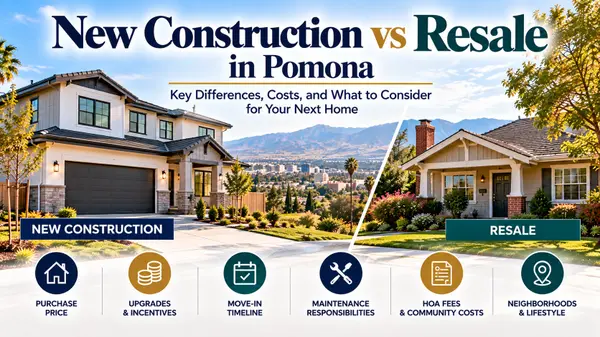
New Construction vs Resale in Pomona: Full Cost Comparison
New construction vs resale in Pomona comes down to whether you value a newer layout and predictable finishes more than an established location and greater negotiating flexibility. The right choice is rarely the one with the lower advertised price. It is the home whose total monthly cost, move-in nee